The problem: real-time traffic management at vertiports
Urban Air Mobility (UAM) is the umbrella term for a coming generation of small, often electric, vertical-takeoff aircraft intended to decongest ground traffic in and around cities. Instead of full-sized airports, these aircraft are expected to operate out of vertiports — small pads, often in dense urban areas, with just a handful of take-off/landing spots and battery-recharging stations.
The catch: a vertiport that size, handling many aircraft movements every hour, can’t be managed the way a human air-traffic controller manages a conventional airport. There are too many aircraft, too little separation, and too little time between decisions for manual scheduling to keep up — which means vertiport traffic management needs to be automated from the ground up.
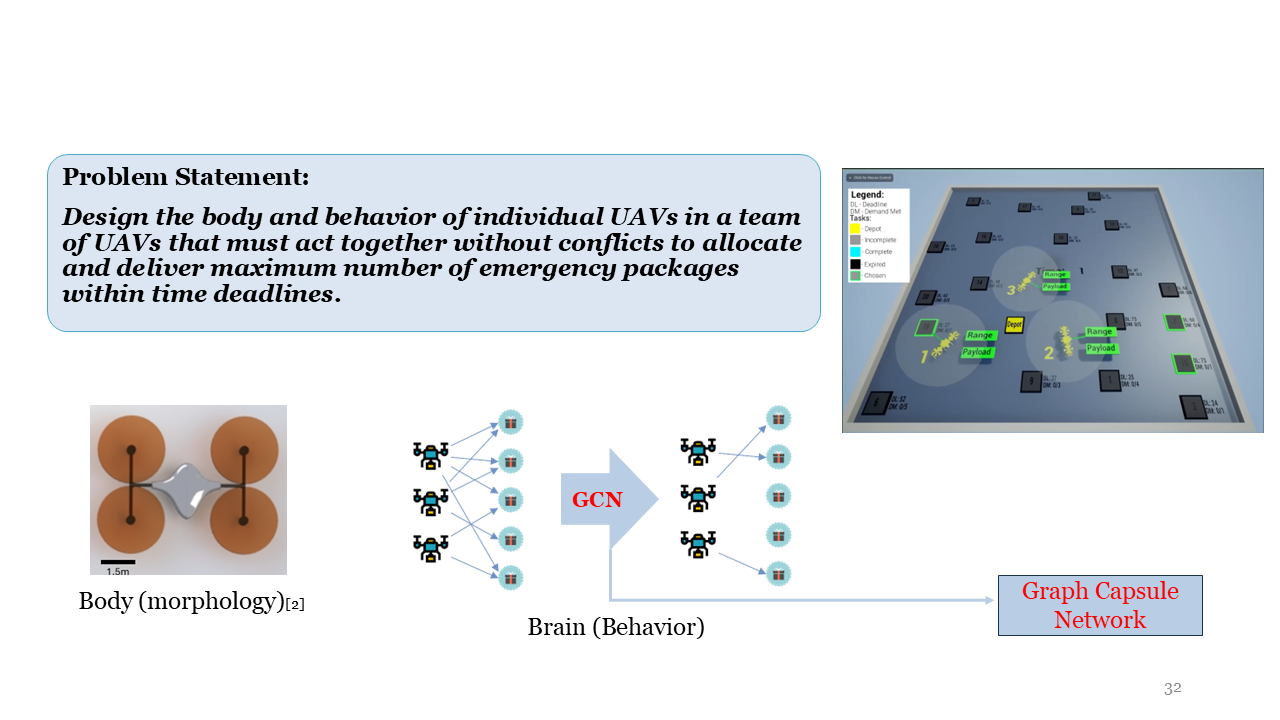
This paper calls this the Urban Air Mobility – Vertiport Schedule Management (UAM-VSM) problem: given a vertiport with a fixed number of physical spots, decide in real time which aircraft hovers, cruises, idles, takes off, or lands where — while minimizing delay, avoiding collisions, and managing battery consumption across the fleet.
The approach: two graphs, one policy
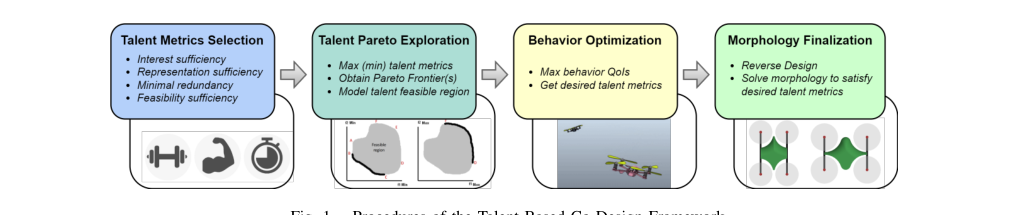
The key modeling idea is to represent the scheduling problem as two separate graphs rather than a flat list of aircraft and slots:
- A graph of the vertiport’s physical spots — the designated take-off, landing, and charging locations and how they relate spatially.
- A graph of the vehicles being managed — the aircraft currently in or approaching the vertiport’s airspace.
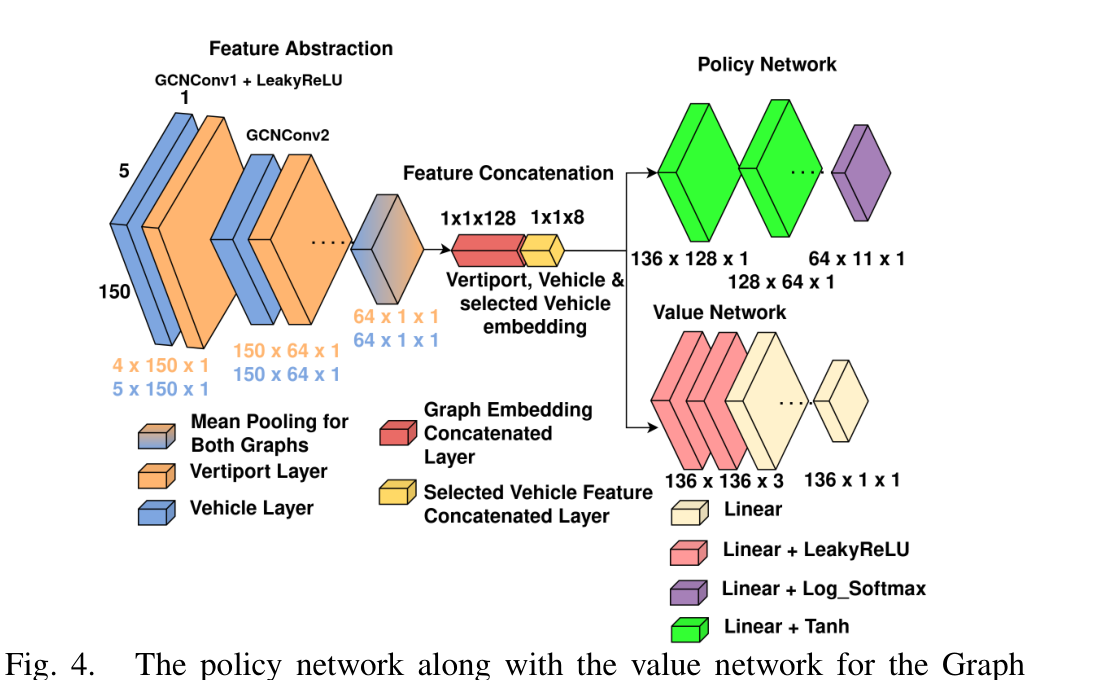
Each graph feeds into its own graph convolutional network (GCN) for feature abstraction; the resulting vertiport and vehicle embeddings are pooled, concatenated with a selected-vehicle embedding, and passed to policy and value networks trained with Proximal Policy Optimization (PPO). The policy decides each aircraft’s next action — stay still, take off, move to or land at a normal or battery port, move to a hovering spot, continue its previous action, or take evasive action to avoid a collision. Because the representation is graph-based rather than a fixed-size vector, the same trained policy generalizes across vertiports with different numbers of spots and different numbers of aircraft — a property a standard fixed-input MLP policy can’t offer.
The reward function combines five weighted terms that map directly onto operational goals: a takeoff coefficient and landing coefficient (rewarding punctual departures/arrivals above a 30% battery threshold), a battery coefficient, a delay coefficient, and a safety coefficient — with safety weighted highest, since maintaining minimum separation between vehicles matters more than any efficiency metric.
Results: fewer collisions, competitive delay
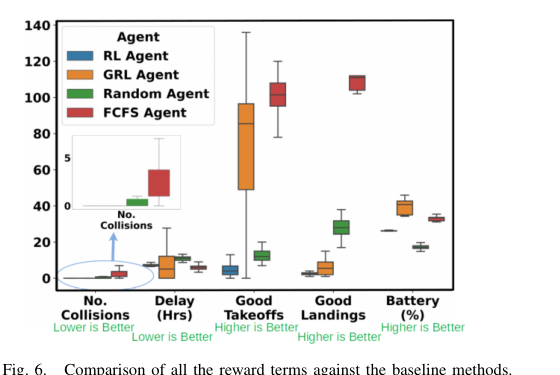
The graph-learning (GRL) agent is compared against three baselines: a standard MLP-based RL agent (same reward, no graph structure), a random agent, and a First-Come-First-Served (FCFS) agent. Across 50 test episodes with 4 vehicles:
- The GRL agent had a mean of 0.3 ± 1.7 collisions — 76% fewer than the MLP-RL agent (0.86 ± 4.24) and 90% fewer than FCFS (2.88 ± 0.66).
- The GRL and FCFS agents had the best cumulative reward (GRL: 565 ± 522.7, FCFS: 293 ± 86), reflecting balanced performance across takeoffs, landings, delay, and battery management.
- The plain RL agent actually beat GRL on raw scheduling delay (7.49 ± 1.43 hours per vehicle, 80% lower standard deviation) — evidence that graph structure buys safety and balanced performance, not a free win on every single metric.
A separate ablation confirms the safety coefficient is doing real work: training without it (weight = 0) roughly doubles collision counts compared to training with it.
The simulation itself runs in a custom Unreal Engine + AirSim vertiport environment, purpose-built with two landing ports, one battery port, and four hovering spots, standing in for scaled-down UAM aircraft.
A companion paper, "Graph Learning based Decision Support for Multi-Aircraft Take-Off and Landing at Urban Air Mobility Vertiports" (AIAA SciTech 2023), applies the same graph-learning approach specifically to the multi-aircraft take-off/landing coordination sub-problem.
Why this matters
Vertiport scheduling is one of the concrete infrastructure problems standing between UAM as a concept and UAM as an operating transportation mode. Regulators, city planners, and aircraft manufacturers all need some answer to “how does a vertiport actually manage a busy hour of traffic safely” before UAM services can scale past demonstration flights. Graph-based decision support is attractive here specifically because vertiports will vary in size and layout from city to city — a policy that has to be retrained from scratch for every new vertiport geometry isn’t a practical answer; one that generalizes across layouts, as this graph-learning approach does, is a much closer fit to how the infrastructure will actually be deployed.
- What is a vertiport in urban air mobility?
- A vertiport is a small, often urban, take-off and landing facility for UAM aircraft — analogous to an airport but much smaller, typically with only a few take-off/landing spots and battery-recharging stations.
- What is Urban Air Mobility Vertiport Schedule Management (UAM-VSM)?
- UAM-VSM is the real-time decision problem of scheduling take-offs, landings, hovering, and battery recharging for multiple aircraft sharing a small vertiport, subject to delay, safety, and battery constraints.