Blog
Research, explained
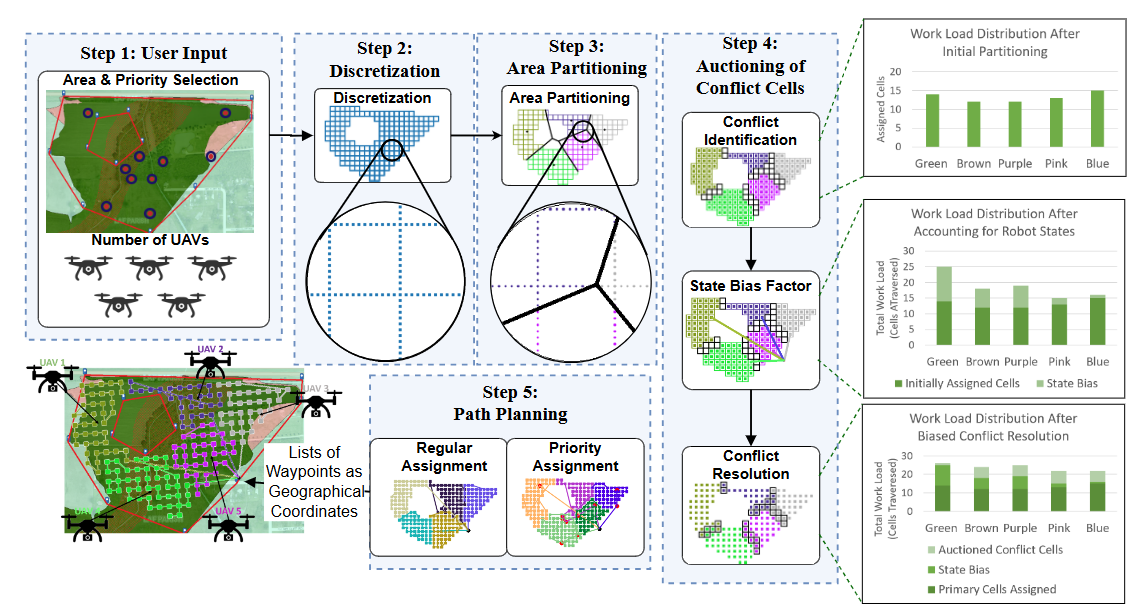
Efficient Planning for Scalable and Load-Balanced Area Coverage by Multiple Unmanned Aerial Vehicles
SCoPP: a coverage path-planning method that load-balances work across a UAV team surveying non-convex areas with no-fly zones, scaling to teams of 150.

Learning Approach to Efficient Vision-Based Active Tracking of a Flying Target by an Unmanned Aerial Vehicle
A compute-efficient perception pipeline (deep learning plus a Kernelized Correlation Filter) paired with a reinforcement-learned neuro-controller for a UAV to actively track a flying target.
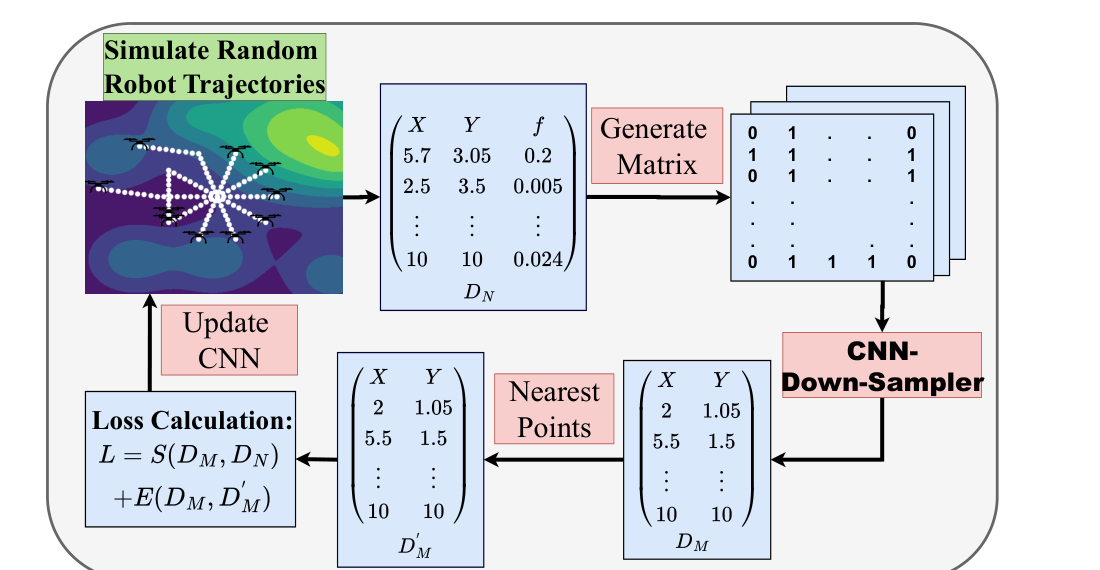
Learning-Based Real-Time Down-Sampling for Scalable Decentralized Decision-Making in Bayes-Swarm Search
CNN-Bayes-Swarm: a learned down-sampler that keeps Bayes-Swarm's decentralized search decisions fast in real time as the amount of collected observation data grows.
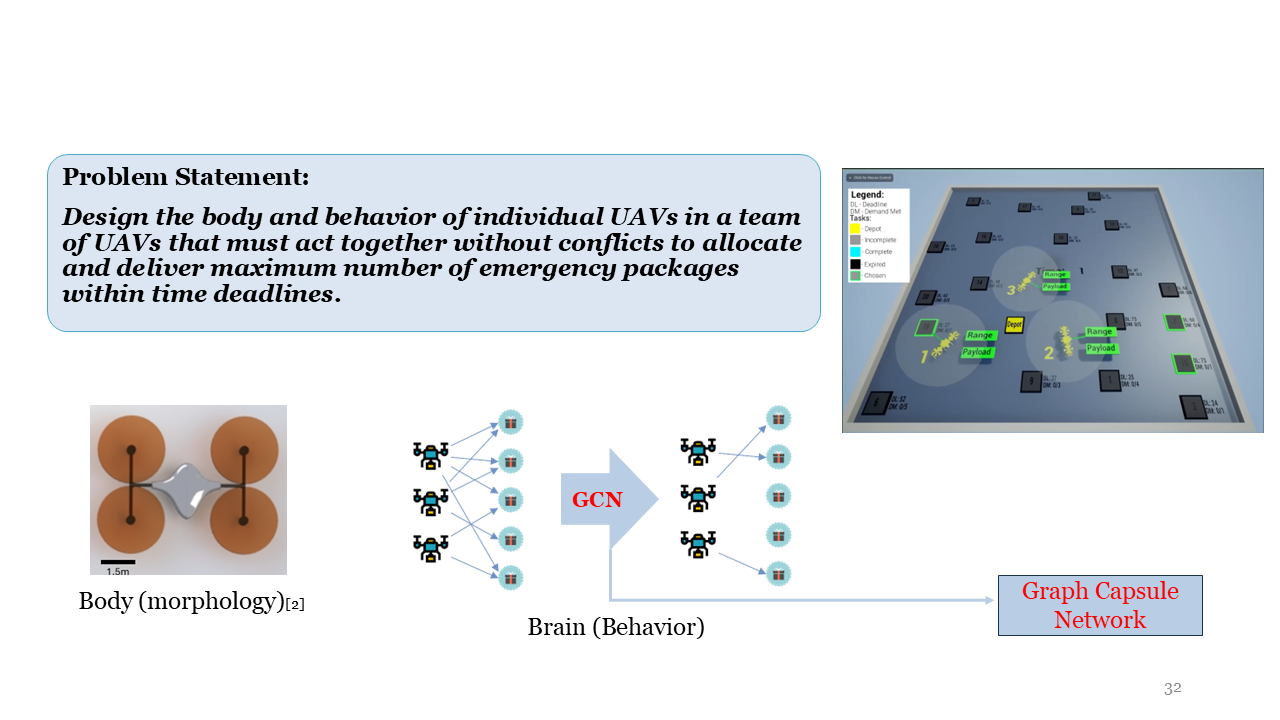
A Talent-Infused Policy-Gradient Approach to Co-Design of Morphology and Behavior in Multi-Robot Systems
A co-design framework that jointly optimizes a robot's physical morphology and its learned task-allocation behavior, applied to a multi-UAV flood-response scenario.

An Open-Source Hardware/Software Architecture and Supporting Simulation Environment to Perform Human FPV Flight Demonstrations for UAV Autonomy
An inexpensive, open-source FPV quadcopter platform and matching AirSim/Unreal Engine digital twin for collecting human-pilot flight data to train and validate autonomous flight agents.
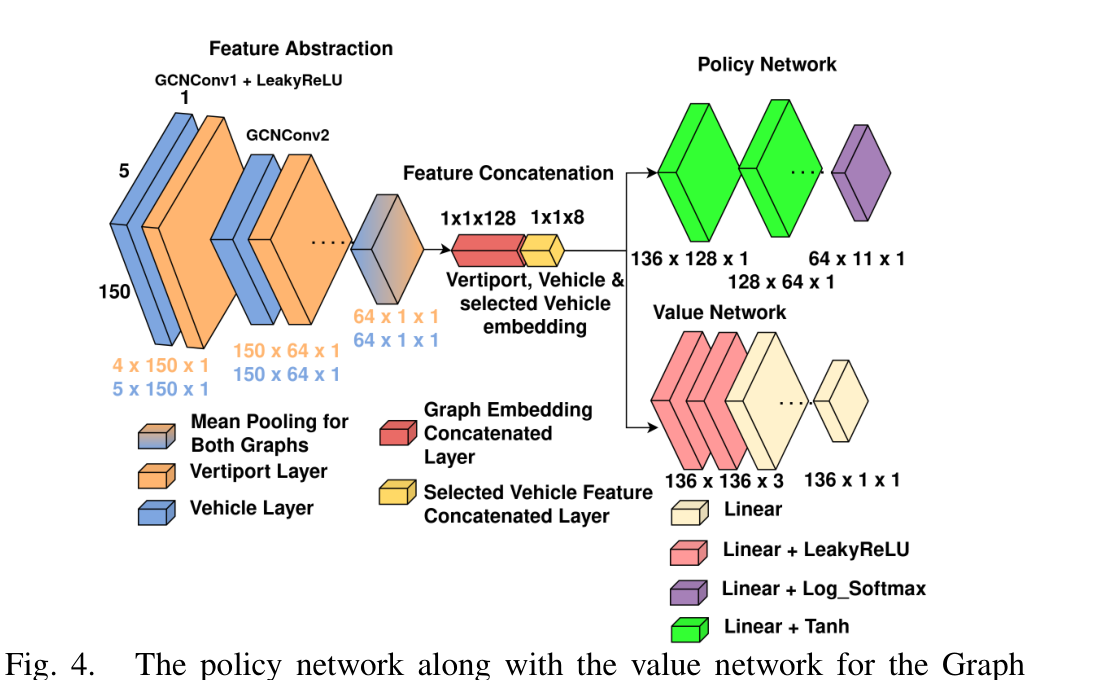
Fast Decision Support for Air Traffic Management at Urban Air Mobility Vertiports using Graph Learning
A graph reinforcement learning approach to real-time scheduling of take-offs, landings, and battery recharging at small urban air mobility vertiports.
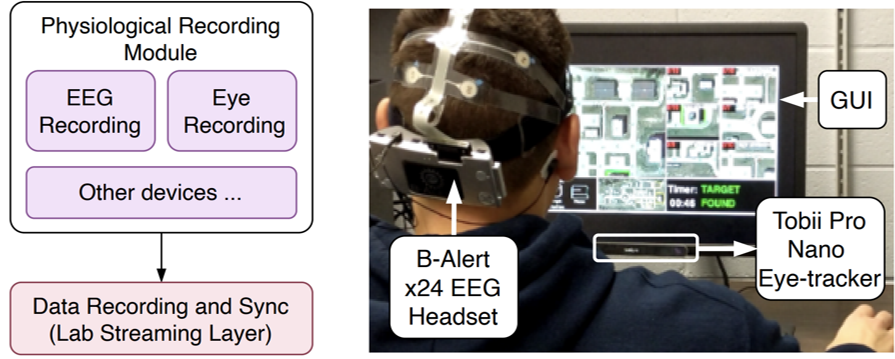
A Framework for Analyzing Human Cognition in Operationally-Relevant Human-Swarm Interaction
A virtual environment for studying human-swarm interaction under varying swarm size, compliance, and feedback, built to inform physical HSI experiments and cognitive modeling.
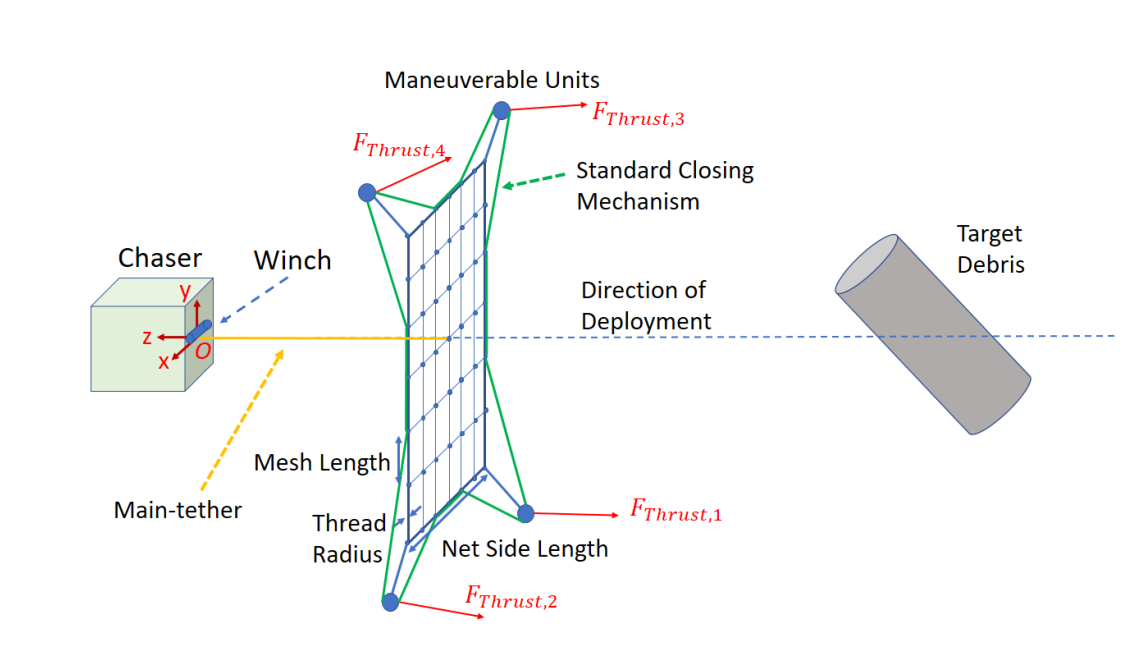
Learning Constrained Corner Node Trajectories of a Tether-Net System for Space Debris Capture
A reinforcement learning framework that plans and controls a decentralized, four-microsatellite tether-net system to capture tumbling space debris.
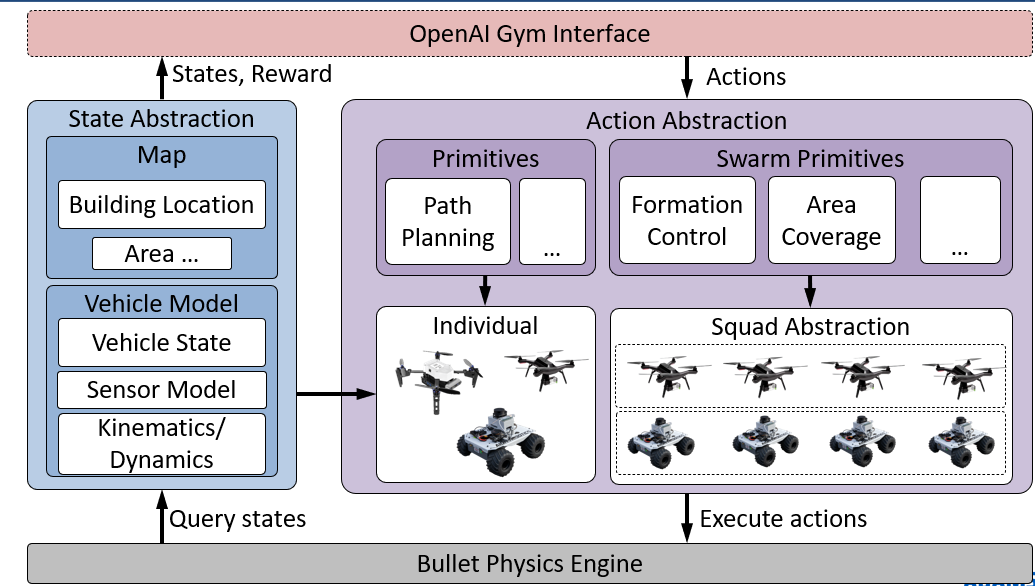
Comparative Exploration of Three Approaches to Learning Heterogeneous Robot Swarm Operations over Abstracted Complex Adversarial Environments
A workshop paper comparing three learning approaches for heterogeneous robot swarm operations in adversarial environments. Full write-up coming soon.

Game Engine Modeling & Simulation Implementations to Evaluate Human Performance in Transportation Engineering
A game-engine-based modeling and simulation approach to evaluating human performance in transportation engineering contexts. Full write-up coming soon.
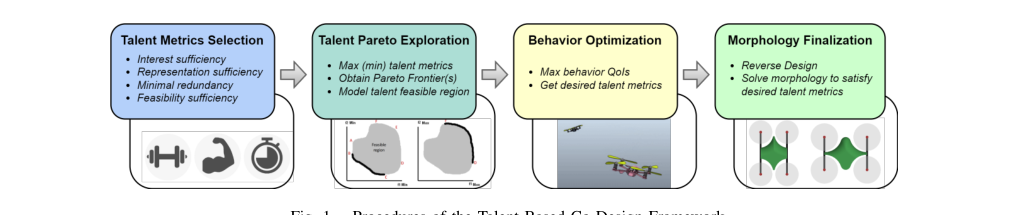
Efficient Concurrent Design of the Morphology of Unmanned Aerial Systems and Their Collective-Search Behavior
A co-design framework using Talent Pareto exploration to jointly optimize UAV morphology and collective-search behavior for victim search and hazard localization.
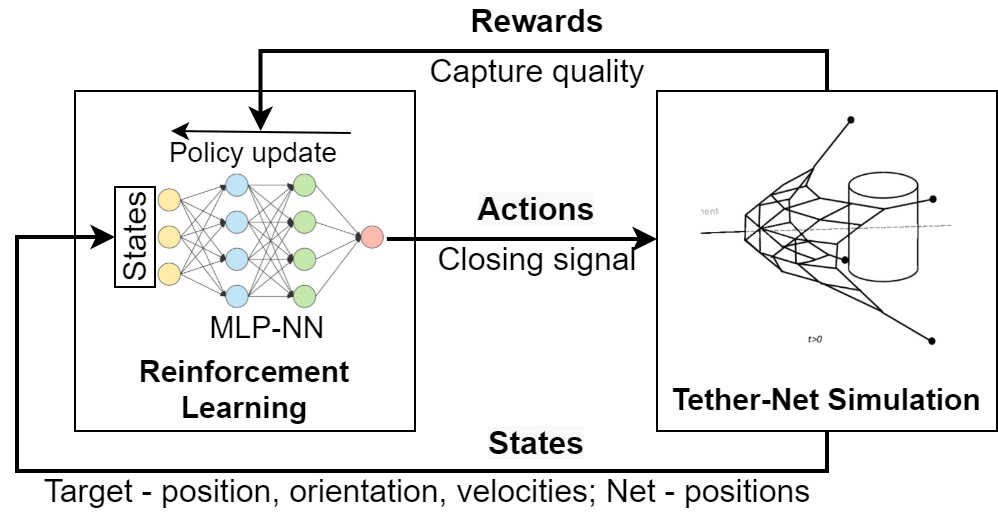
Learning Robust Policies for Generalized Debris Capture with an Automated Tether-Net System
A PPO-based reinforcement learning policy for timing tether-net closure during space debris capture, trained to generalize across launch and target scenarios.
Learning Robot Swarm Tactics over Complex Adversarial Environments
A neuroevolution and policy-gradient approach to learning complete swarm mission tactics — composing task allocation, path planning, and formation control — in adversarial environments with up to 60 robots.